Fiserv and several major gas-station operators have warned U.S. retailers that selling unauthorized vaping products could lead to heavy fines or loss of card-processing services.
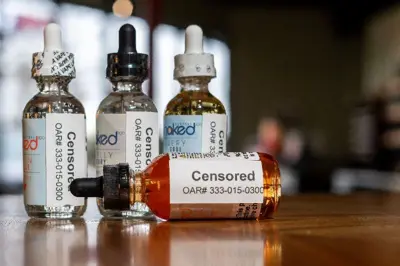
That moves vape enforcement from FDA letters and customs seizures into the checkout lane. If a store cannot run cards, regulators and private payment networks do not have to win a court fight to make the products disappear.
The new warnings were described in notices reviewed by Reuters. Reuters reported July 3 that payments company Fiserv, through CardConnect, and fuel retailers including BP, Marathon Petroleum, and Valero, told merchants not to sell electronic nicotine delivery system products that lack Food and Drug Administration marketing authorization.
According to Reuters, BP told branded station operators that Mastercard had begun issuing compliance notices tied to transactions involving illegal ENDS products. Valero reportedly warned in a June 17 notice that payment processors could impose mid-six-figure fines for a single violation or cut off processing services.
CardConnect also warned partners that vape sales must comply with applicable law, according to the report. The company said merchants using its services should not sell vaping products without FDA authorization.
The pressure did not appear out of nowhere. On April 28, New York Attorney General Letitia James announced that a coalition of 24 other attorneys general and New York City had asked American Express, Capital One, Citi, Mastercard, Visa, PayPal, Stripe, Block, and Sezzle to block unlawful vape transactions. The coalition asked the companies for meetings and urged them to prevent merchants that violate federal, state, or local law from using their networks.
The same campaign has already reached e-commerce. On June 23, California Attorney General Rob Bonta said Shopify would ban all vaping-product sales through its platform after pressure from a 25-attorney-general coalition and New York City.
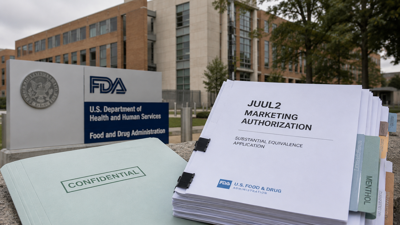
The legal hook is the FDA’s premarket tobacco application (PMTA) system. The agency says new tobacco products must receive marketing authorization before sale, and that products sold without authorization are adulterated and misbranded under the Federal Food, Drug, and Cosmetic Act. The FDA’s unauthorized-products enforcement page says only 45 e-cigarette products may currently be lawfully sold in the United States.
The irony is that the FDA itself has recently begun admitting what adult vapers have known for years. In May, the agency authorized four non-tobacco-flavored Glas products, and acting Center for Tobacco Products Director Bret Koplow said innovation could help make more flavored options available for adults who smoke and may switch completely.
But most of the market remains outside FDA’s tiny authorized list. That gives prohibitionist attorneys general a powerful new lever: not just threaten manufacturers and retailers, but pressure the financial plumbing underneath them.
For stores, the message is blunt. Unauthorized vape sales are no longer just an FDA-risk problem. They may now be a payment-risk problem, too.

CBG (cannabigerol) is the mother of all cannabinoids, including CBD and THC. Learn more about CBG flower, its effects, strains, and whether it can get you high.

Learn how old you have to be to buy caffeine pouches, including federal and state age restrictions, retailer policies, and rules for minors.

Learn whether caffeine pouches are safe, including potential side effects, caffeine limits, oral health risks, and who should avoid them.

Because of declining cigarette sales, state governments in the U.S. and countries around the world are looking to vapor products as a new source of tax revenue.