We'd like to thank Kirsten Thornhill and NanocraftCBD for answering our questions on water-soluble CBD. Kirsten Thornhill, MS, is an exercise specialist and a content writer for NanocraftCBD. You can find Kirsten's articles on various CBD subjects at Nanocraft's blog.
Chances are that you have seen more and more water-soluble CBD products on the market. But with oil and water not being able to mix, how is water-soluble CBD made possible? And does water-soluble CBD have any advantages compared to other types of CBD oil? To get answers to these and other questions, we decided to ask the experts.
NanocraftCBD is a company that specializes in nanotechnology-based CBD products. Their products are all third-party tested, and their hemp-derived CBD is non-GMO and contains no pesticides, solvents, herbicides, or chemical fertilizers. Here's what NanocraftCBD had to say about water-soluble CBD.
What is water-soluble CBD?
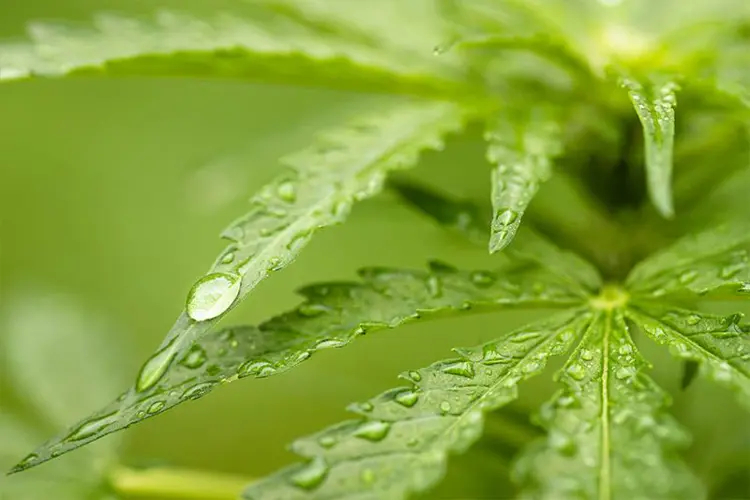
To start, let’s talk cannabis. The cannabis plant can be used as an umbrella term to encompass marijuana and hemp plants, hence, why you may hear these terms used interchangeably. The marijuana plant contains tetrahydrocannabinol (THC) and cannabidiol (CBD), amongst other cannabinoids, flavonoids, and terpenes. The hemp plant may also contain the compounds listed above but contains little to no THC.
Furthermore, cannabinoids, including tetrahydrocannabinol (THC) and cannabidiol (CBD), are hydrophobic, oily substances—meaning, they aren’t necessarily easily “blendable” with water. Making CBD water-soluble can be described as the process of incorporating cannabinoids into water by first separating them into tiny particles, specifically ions or molecules.
How is water-soluble CBD made?
Water-soluble CBD is made using nanotechnology, the science and engineering involved in the synthesis, design, characterization, and application of materials in their smallest functional organization on the nanometer scale. In layman’s terms, nanotechnology uses soundwaves to break down cannabidiol clusters into very small-sized particles—smaller than 100 nanometers.
In order for oils (including THC and CBD) to become mixable in water, they should be formulated as nanoemulsions or microemulsions using a liquid suspension process to protect and deliver bioactive components. This liquid suspension process can be scientifically described as "colloidal dispersions". This process suspends small particles and distributes them within a liquid.
Micro and nanoemulsions can be prepared in concentrated forms that are fully capable of mixing with water, thus, appearing water-soluble. Note that emulsions require the use of surfactants, which dilute the products. There are natural surfactant options available, with minimal adverse negative effects. However, it is beneficial to use the smallest amount of surfactant as possible.
Once broken down into these tiny particles, CBD becomes H2O-compatible, blending seamlessly with the H2O molecules. Boom - emulsion! These nanoemulsions and microemulsions are visually homogeneous oil/water mixtures, in a general sense.
Nanoemulsions vs microemulsions: what's the difference?
Nanoemulsions have a bright advantage over microemulsions: the amount of surfactants needed for the water-soluble preparation is up to 10 times lower than the surfactants needed to make microemulsions. This is great because by using less surfactant, the solution is diluted to a lesser degree—i.e., the final product is more potent in CBD.
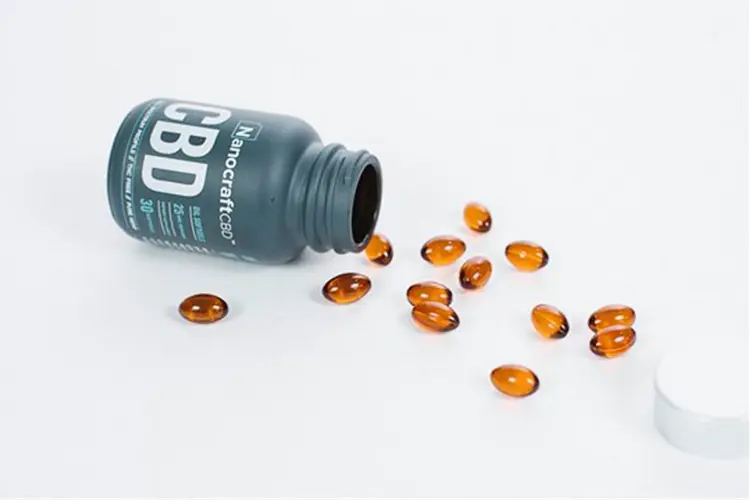
At Nanocraft CBD, our phytocannabinoid-rich (PCR) raw hemp oil goes through a proprietary process that transforms it into nano-sized emulsions. This makes it the most bioavailable broad-spectrum CBD in the industry. The nanoemulsion process we utilize enables our formulas to be four times more bioavailable than other water-soluble hemp-based oils.
Our nanotechnology successfully increases the surface area of each substance in our CBD Waters, CBD Capsules, and CBD Immune Boost Softgels, so less is much more.
What about liposomal CBD?
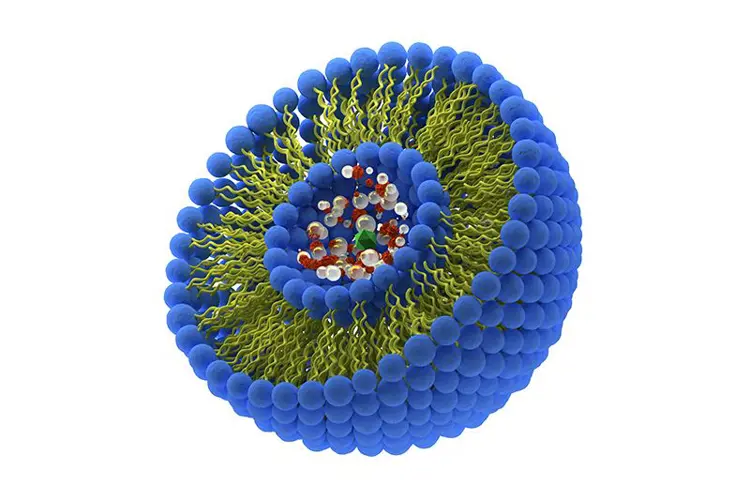
Now that we’ve touched on micro and nanoemulsions in regard to CBD, let's talk about liposomal CBD. Liposomes are biodegradable phospholipid structures that may help maintain therapeutic levels in the bloodstream when used as a carrier for nutrients or substances. You can think of liposomes as a bubble surrounding CBD molecules.
Liposomes, when added to cannabidiol, have been suggested to exert a quicker absorption of CBD in the body as well as a higher percentage of CBD being delivered to the bloodstream, compared to other carriers (such as olive oil). Liposomal CBD may be delivered to the bloodstream up to four times faster than traditional carriers.
So, is liposomal CBD a better option in the end? Probably not! For starters, the whole process is expensive and demanding to perform. On top of that, consider this: the standard size of nano-CBD hemp oil droplets is 10-100 nanometers, compared with the 100-5000 nanometers that are usually obtained by using the standard liposomal method. So, with the use of nanoemulsions, the cannabinoid particles themselves are made small enough for your body, leading to much higher absorption into the cells.
What are the benefits of water-soluble CBD?
When compared to a CBD oil, water-soluble CBD gives consumers more power to choose just how they want to utilize their CBD. Typically, water-soluble CBD can be encapsulated into pills, capsules, and softgels. These types of products offer a lot in terms of convenience and ease of use. Benefits of water-soluble CBD include:
Water-soluble CBD is highly bioavailable.
Higher bioavailability refers to the amount of nutrients in a product that can be potentially absorbed by the body. In regards to CBD, if a CBD product has high bioavailability this means that it has a high amount/concentration of CBD that can be absorbed into the bloodstream.
As a consumer, you want this! You’re not only getting a bang for your buck, but you’re sure to reap the benefits to their full potential.
Available products allow for consistent dosing.
Each pill, capsule, and softgel, includes a specific amount of CBD. The benefit of this is that you know exactly what dosage you’re getting. No guessing games or remembering how many milligrams are in a pipette or a vape tank. It’s the same, consistent dose every time.
Increased convenience.
Taking CBD by pill, like any other pharmaceutical drug, is certainly convenient and inconspicuous. You can take it with a gulp of liquid and down goes the soon-to-be CBD benefits, metabolizing in your intestines.
Hopping on a plane and want to take your CBD capsules with you? Easy. Want to take CBD in public with little to no attention or stares from others? Easy. Want to put a couple of capsules in your pocket for when you need a better sense of focus at work? Easy!
Are there any downsides to water-soluble CBD?
Possibly! It can depend on the consumer and what kind of CBD product they are looking for. If a user wants to reap the benefits of a full-spectrum oil, water-soluble CBD may not be the best fit. However, if you’re not big on the CBD tincture oil taste and are looking for a product with 0.00% THC, water-soluble products may be your go-to!
Typically, water-soluble CBD only contains CBD.
One drawback to this form of CBD is that you may just be receiving CBD isolate, which is the crystallized, purest form of CBD. This sounds great, but some consumers may also want CBD with other cannabinoids present. Thus, this water-soluble form may not come with all of the benefits that the plant has to offer.
For some, this may be a great thing! But other consumers may want trace amounts of THC present to feel a unique blend of relaxation and euphoria. For instance, some consumers may prefer full-spectrum cannabidiol because of the unique blend of terpenes, flavonoids, cannabinoids, and up to 0.3% THC.
Water-soluble CBD may not stay in your system for long.
Because of the way oils and fats are metabolized in our system, broad and full-spectrum oils typically stay longer in our system. This allows them to have a longer-lasting effect compared to water-soluble CBD, which can be excreted when you urinate.

Sweden’s government deadlock could delay EU nicotine tax negotiations as its opposition to higher minimum taxes on nicotine pouches remains uncertain.

FDA announces four new tobacco advisory committee members and seeks nominations for two additional voting positions by Dec. 14, 2026.

China destroyed more than 55,000 vapes and 188 million smuggled cigarettes as a wider crackdown seized $355 million in illicit tobacco.

Eight EU governments want a ban on new nicotine products, broad flavor restrictions, and tighter rules for vapes and nicotine pouches.
The OXVA VPRIME 2 delivers sub ohm performance in a pod-style device. Read our review to learn about its upgrades, size, battery life, flavor, and more.
Check out our OXVA XLIM 4 and XLIM PRO 4 review to learn about the new UNITECH 3.0 pods and the incredibly innovative anti-burn tech (ABT).
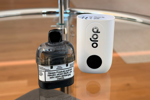
The DOJO BLAST X combines a 10 mL refill system, a dual-mesh coil, and a 1000 mAh battery. Is it needlessly confusing? Read our review to find out.
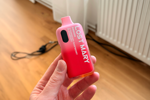
The Lost Mary BM6000 is a pre-filled pod vape that pairs a 2 mL pod with a 10 mL refill container and a QUAQ mesh coil. Read our review to learn more.